Financial inclusion Understanting financial behaviors in Morocco
Financial institutions still very often segment their customer base using classic statistical criteria: age, income, occupation, place of residence. But these categories rarely explain how people actually make their financial decisions. This is precisely the observation Archipel&Co placed at the heart of a study conducted for CGAP (hosted by the World Bank), within the Coalition for Women's Financial Inclusion in Morocco.
Rather than starting from socio-demographic data, the team chose to understand the real behaviors, constraints, aspirations and trade-offs of low-income women, in order to identify new design directions for financial solutions.
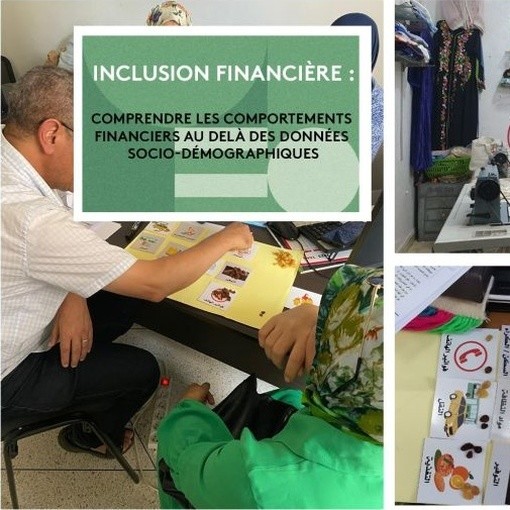
40 qualitative interviews, 3 dedicated focus groups, field observations and a human-centered approach made it possible to draw up 5 distinct personas, reflecting different relationships to money, risk, digital tools and entrepreneurship. This more nuanced reading surfaced well-founded insights into the needs, constraints and mechanisms of financial exclusion, as well as design opportunities for financial services, and progressive inclusion pathways combining financial and non-financial services.
One lesson runs through the study: the barriers to accessing and using financial services are not purely economic. They are also social, cultural, behavioral, and family-related. For example, despite daily use of digital tools, women make less use of digital finance solutions. Not because they reject technology, but because interfaces, user journeys and financial logics have too often been designed without accounting for their real usage patterns or how they manage money.
Driven by CGAP, this human-centered approach aimed to instill a different way of thinking about innovation for banks, financial institutions and fintechs, which too often still design around "product"-centered logics. This study contributes to evolving their innovation processes, to build products that are genuinely fit for purpose and to identify new customer markets.
Persona-based and human-centered approaches don't replace quantitative data analysis: they enrich the understanding, reconnect innovation with real needs, and reveal lived aspirations and constraints.
A big thank you to CGAP, and to the members of the Moroccan coalition: Banque Centrale Populaire, GCAM, Bank Al-Maghrib.